Kathmandu, April 14 — ‘Nepal First’ Policy Announced
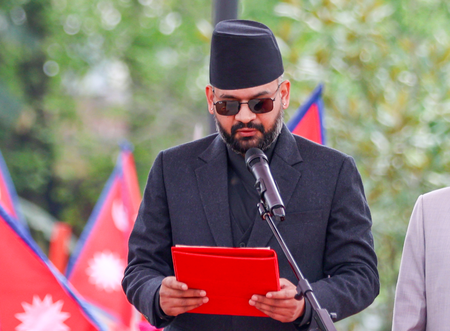
Echoing a growing global trend of adopting nation-first approaches, the new Nepali government led by Balendra Shah on Tuesday unveiled plans to pursue a “Nepal First” foreign policy.
‘Nepal First, Nepalis First’ at Core of Diplomacy
“The concept of ‘Nepal First, Nepalis First’ will be placed at the centre of its diplomatic priorities,” the government said in a draft of the National Commitment Paper circulated for feedback among the six political parties that secured national recognition following the March 5 elections.
Six Major Parties Get National Recognition
Rastriya Swatantra Party, Nepali Congress, Communist Party of Nepal (Unified Marxist Leninist), Nepali Communist Party, Rastriya Prajatantra Party and Shram Sanskriti Party emerged as parties with national recognition.
100-Point Governance Reform Agenda Introduced
The draft National Commitment Paper was prepared as part of the 100-point governance reform agenda issued shortly after Balendra Shah was sworn in as Prime Minister on March 27.
Equal Distance, Equal Proximity Policy Explained
According to the proposed plan, the Himalayan nation will maintain “equal distance and equal proximity” with all countries, based on the belief that military alliances, arms races, and wars hinder global peace.
India-Nepal Relations Highlighted
In practice, नेपाल shares a multifaceted relationship with भारत due to geography, culture, and religion, as both are Hindu-majority nations.
Focus on Balanced and Dynamic Diplomacy
Nepal will also pursue a “balanced and dynamic diplomacy” aimed at converting global geopolitical changes into opportunities for development, while prioritising sovereignty, territorial integrity, and national interests.
Economic Growth and Investment in Focus
The policy document states that Nepal will leverage the rise of neighbouring powers and shifting global dynamics to boost economic development, attract investment, and enhance regional cooperation.
Non-Aligned Yet Pragmatic Approach
Under this approach, Nepal will maintain its traditional non-aligned stance while adopting a pragmatic, flexible, and results-oriented diplomatic strategy.
From Buffer State to ‘Vibrant Bridge’
The government has proposed transforming Nepal from a traditional “buffer state” into a “vibrant bridge,” emphasising sovereignty and national interest.
Strategic Location Between India and China
Situated between two major powers — भारत and चीन — Nepal has historically functioned as a buffer state between geopolitical rivals.
Trilateral Cooperation and Global Positioning
According to the government, the goal is to advance national interests through trilateral economic partnerships and regional connectivity, while establishing Nepal as an independent, neutral, and non-aligned nation on the global stage.
India-Nepal-China Cooperation Implied
Although the proposal does not explicitly name the countries, it is widely understood to refer to cooperation between Nepal, India, and China.